
Pre-made food can encompass anything from appetizers to entrees to side dishes to desserts. Whether it’s a pre-made Italian Antipasto platter from your favorite restaurant, a ready-to-serve roast from the supermarket, or a dessert sampler from a great bakery, it’s easy and generally economical to incorporate pre-cooked food into both your menu and your budget. Almost all pre-made party food falls into three categories:
- Pre-Made Food bought over the counter from stores or delis or ordered in advance from specialty markets.
- Pre-Cooked Foods prepared at home in advance and finished or re-heated for the actual event.
- Restaurant Catering: pre-cooked dishes or platters from a restaurant. These can be ready-to-eat or may require the cooking to be finished at the event.
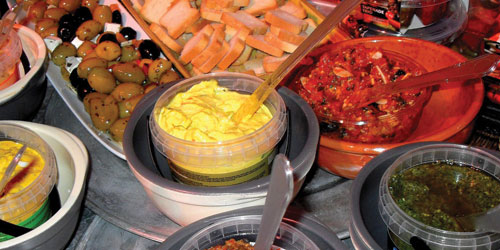
Pre-made food can add a special touch to any event or party, and lends itself especially well to ethnic foods that you may not know how to cook or don’t have the specialized equipment for. Don’t know how to make delicious stuffed grape leaves for an appetizer? A local market or restaurant can solve that problem.
Option 1: Buying Pre-Made Food
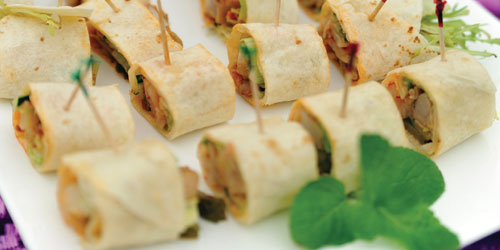
Party platters have come a long way from the days when the only option at the local deli was a big stack of soggy mini-subs. Almost all supermarkets, delis, specialty stores, and most restaurants now offer a wide variety of pre-cooked food for entertaining. In addition to off the shelf pre-made platters or ready-to-reheat foods, many places also offer custom cooking to order.
In general, buying pre-made food is less expensive than full or even partial catering, but there are several considerations to take into account.
- What foods are best for buying pre-made?
- Pre-made appetizer platters (fruit, cheese, salumi) are a great choice for saving prep time.
- Dishes like rotisserie cooked meats that require special cooking.
- Kids’ table platters (chicken fingers, mini sliders) free up cooking time and space for grown up food.
- Specialty items such as pre-made olive bar arrangements, sushi trays or raw bar seafoods.
- Foods for special diets: low-salt, gluten-free, kosher, halal and vegan platters.
- Desserts: specialty cakes, mixed dessert selections or cookie variety plates are often easier to purchase from a bakery than to make at home.
- Does it make sense to buy pre-made? Think about what you’ll be ordering in terms of time, effort and price. Ordering pre-made platters or dishes for parties can free up time for other cooking, decorations, cleaning and more.
- What kind of serving dishes are required? When ordering party platters or pre-made food, ask about how the foods will be presented. Certain special foods such as kosher or halal cooking will often require special, or at least separate, dishes and utensils. Many places also offer the option of creating platters using your own serving dishes.
- Does it need to be reheated? There’s nothing worse than having a gorgeous pre-made platter that needs to be disassembled in order to reheat it for serving. Plan ahead so that once it’s on the plate, it’s table-ready.
Option 2: Cooking Party Food in Advance
There are times when nothing will do for a party but home cooking. However, there’s also nothing worse than spending all your time at a party in the kitchen instead of enjoying the event you worked so hard to arrange! Careful planning is once again the key to making sure that everyone — including you — has a great time.
The most important thing about cooking party food in advance is knowing how it’s going to be stored in the interim and what (and how long) it will take to be ready to serve at the actual event. For each make-ahead item, make sure you have dishes to store the food, space in the refrigerator or freezer (not necessarily your own), and a plan for final prep and service.
- Think spatially: Ever play farming games like Farmville or Clash of Clans? Apply those skills to your party planning! Timing and resource management are key elements to a successful event.
- Work backwards when planning your menu: Start with a plan for how and when things will be served. If your planned dessert will need an hour in the oven, but that will overlap with the main dish reheating at a different temperature, you have a problem. Plan your dishes accordingly.
- Make a reheating chart: It might seem like overkill beforehand, but since there’s no such thing as being too organized in party planning, create a chart that blocks out:
- The time range for the event, starting with the earliest time that prep need to start. Block times out in hour or half-hour increments on the left side of the chart.
- In the second column, list every dish that will be served, next to when they will be served.
- Across the top row, list all the devices that will be used to cook or reheat the dishes. If necessary, add a column for anyone who will be bringing ready-to-serve or ready-to-reheat items for the event (catering companies, friends, etc).
- Fill in the blocks for each dish-and-device combination, blocking out when and where things will be cooked.
- Make a cooking chart: Once you have a manageable menu chosen, research each dish on how far in advance it can be made. Create a separate chart of when each dish can be prepared. Be aware that (in general):
- Some foods, such as pasta salads, potato salads, and some soups, improve when made 1-2 days in advance and refrigerated.
- If freezing dishes, make sure to check if they need to be fully defrosted before reheating, and plan accordingly.
- Certain foods do not freeze well, such as leafy greens, raw celery and cucumber, fully cooked pasta dishes, fried foods, creams or custards, and yogurt, sour cream, or milk sauces. Many seasonings, herbs, and spices can change flavor when frozen, so should be added during the final reheating or cooking process.
- Make a serving chart: Create a similar chart for the serving dishes and utensils needed for each dish.
- Make an event-prep checklist by date:
- Create one list showing all things that need to be done, in order.
- Include anything that needs to be done, including shopping, cooking, invitations, defrosting… everything.
- Keep the list wiht the cooking, reheating, and serving lists.

Option 3: Using Pre-Made Restaurant Food
Catering from a restaurant is much more than just gettting “take out” — increasingly, restaurants are offering both full and partial catering services. When looking into using a favorite or a new restaurant to provide event food, it’s best to start off by finding out the scope and content of their catering capabilities. Some will provide full caterer services only on their own premises. Some will deliver but not serve, and others will provide pre-cooked dishes for pick-up only. If using restaurant food for an event, find out what they can, or will, provide before you get too deep into the planning process.
Things to consider when using restaurant catering services:
- Do you need full catering, partial catering, or food alone? Make sure the restaurant handles whatever option you’ve chosen.
- Get a contact person:
- Make sure you have all the contact information for someone at the restaurant who can handle all the order details.
- If your event is on a weekend, make sure you have numbers for your contact as well as someone at the restaurant itself and, if necessary, the delivery driver.
- Get it all in writing:
- Have the restaurant draw up a contract of exactly what is to be provided, when, and what the cost will be.
- Make sure there are no “hidden” costs. If they are delivering food, be sure to find out if there is an additional cost.
- Find out how the food will be packaged:
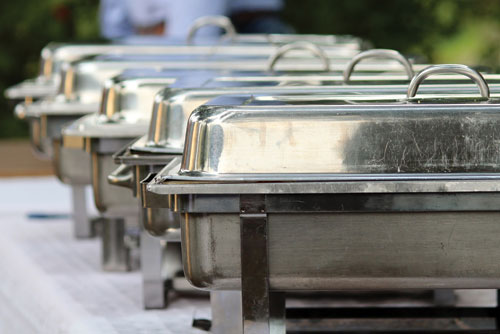
- Will the restaurant provide bulk containers that need reheating? Make sure you know if the pans are oven (or microwave) safe – and if they will fit into your devices.
- If the dishes are going to be served buffet-style, find out if the delivery containers can be used for serving, or if you need to have separate platters.
- Know their ingredients: Make sure you get a full ingredient list in case of guests with allergies.
Comments
20 Beta Ecdysterone? Sounds like something for the gym buffs. Gains here! Check this interesting website for more details at: 20betaecdysterone